


Marietta Toyota Blog
Why the 2026 Toyota RAV4 Leaves the 2026 Hyundai Tucson in the Dust
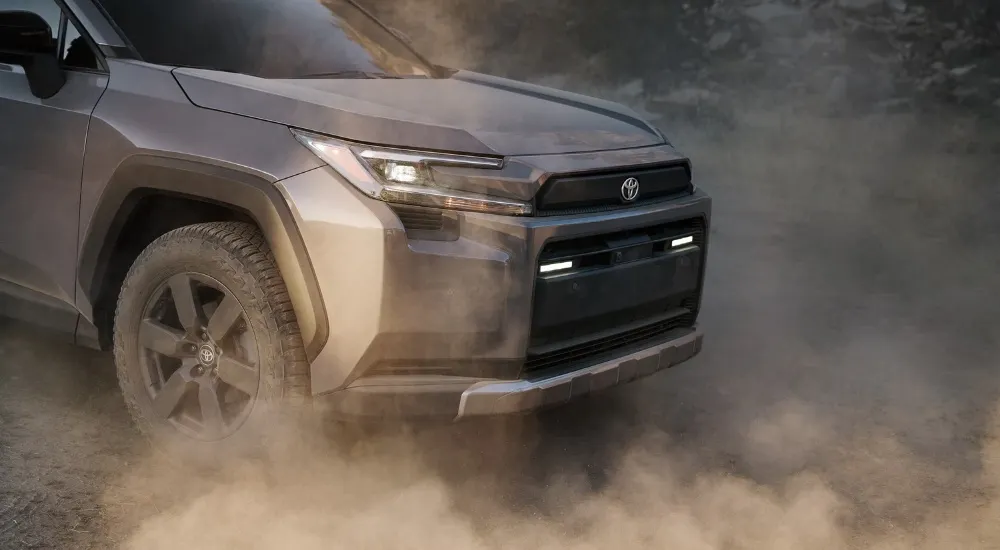
For decades, buying the entry-level trim of a compact SUV meant making a compromise. You usually had to accept a sluggish engine, underwhelming fuel economy, and a driving experience that felt more like a chore. For 2026, Toyota has flipped this script by standardizing on its more efficient hybrid powertrain for the RAV4 lineup. Every 2026 RAV4, from the LE trim up, is now a hybrid, delivering electrifying performance right out of the gate.
This is a big shift from competitors like Hyundai, which are still relying on older internal combustion technology for their volume sellers. When you look for a new Toyota RAV4 for sale near Smyrna, you will be entering the next generation of automotive engineering. Meanwhile, the 2026 Hyundai Tucson has chosen to stick with a traditional 2.5L gas engine for its standard trim. This decision leaves a widening gap in performance, efficiency, and overall value that is impossible to ignore.
Powertrain Wars: 226 hp vs 187 hp
The most glaring disparity between these two vehicles lies in the raw numbers. The 2026 Hyundai Tucson’s standard powertrain is a 2.5L four-cylinder gas engine that produces 187 horsepower. That is adequate for getting from point A to point B, but it lacks excitement. The 2026 Toyota RAV4 hybrid powertrain delivers a combined net output of 226 hp for Front-Wheel Drive (FWD) models and 236 hp for All-Wheel Drive (AWD) models.
Fewer Visits to the Gas Pump
It would be a mistake to discuss the 2026 RAV4 without highlighting its fuel efficiency. Because every RAV4 is now a hybrid, the base fuel economy has skyrocketed. While official EPA estimates fluctuate slightly by trim, the 2026 RAV4 is engineered to deliver 43 MPG combined. This is a game-changer for daily commuters who are tired of watching their hard-earned money disappear into a gas tank.
The gas-powered 2026 Hyundai Tucson, by comparison, trails far behind. With its traditional gas engine, it achieves a mere 28 MPG combined. Over the course of a year, that difference adds up to hundreds of gallons of fuel. For the average driver covering 12,000 miles annually, the savings offered by the RAV4 can cover a significant portion of maintenance and insurance costs.
Real-World Acceleration
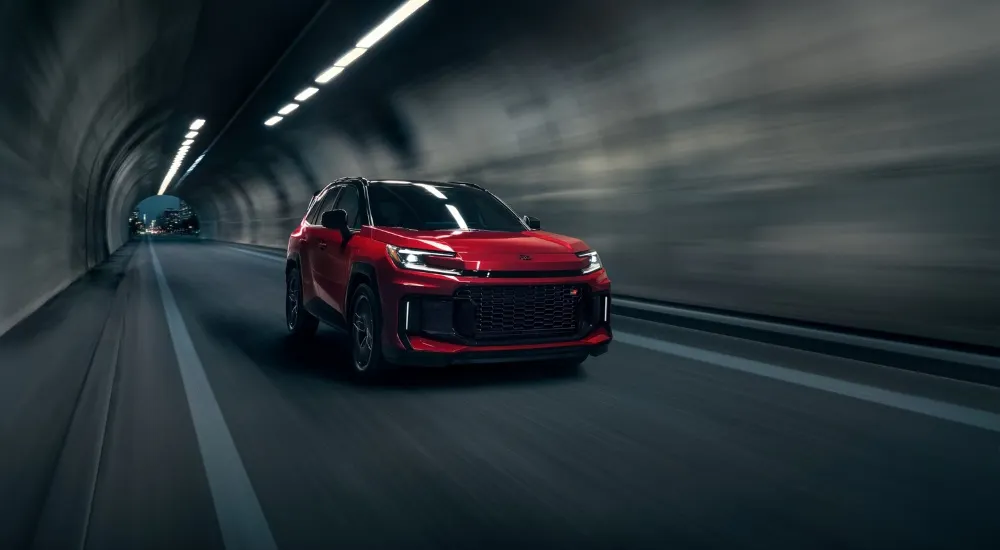
Specs on a page are one thing, but how these vehicles behave on the highways around Smyrna is what truly matters. Imagine you are trying to merge onto I-75 or I-285 during rush hour. You have a short ramp and a split second to get up to speed with traffic that is moving at 70 mph or faster. In the Hyundai Tucson, this maneuver often requires you to floor the gas pedal and wait for the vehicle to catch up to your intentions.
In the 2026 RAV4, electric motors deliver immediate thrust, propelling you into traffic without drama. You don’t have to stress the engine or suffer through the loud drone of a straining powertrain. It simply goes where you point it, with a reserve of power left over for overtaking slower vehicles.
Resale Value
As the automotive industry shifts aggressively toward electrification, traditional gas-only engines are becoming less desirable in the used car market. By the time you’re ready to upgrade, a gas-only compact SUV like the base Tucson may depreciate more steeply as buyers shift to hybrids and EVs.
The 2026 RAV4, being a standard hybrid, is already positioned as a future-forward vehicle. Toyota hybrids have historically held their value incredibly well, often outperforming their gas-only counterparts from other brands by a wide margin. By choosing the RAV4, you are buying technology that will still be relevant and sought after years from now.
All-Wheel Drive Capability: The Electronic Advantage
If you opt for an All-Wheel Drive (AWD) model, the difference between the two vehicles becomes even more pronounced. The Hyundai Tucson uses a traditional mechanical AWD system, which uses a driveshaft to send power to the rear wheels. This system adds weight, friction, and complexity to the drivetrain, which can further sap fuel economy and power.
The 2026 RAV4 utilizes Toyota’s Electronic On-Demand All-Wheel Drive. Instead of a heavy driveshaft connecting the front and rear axles, the RAV4 uses a dedicated electric motor to power the rear wheels independently. It can react in milliseconds to wheel slip, sending torque exactly where it is needed without the mechanical lag of a traditional system.
This electronic AWD setup also improves handling on dry pavement. By subtly applying torque to the rear wheels during cornering, the RAV4 can reduce understeer and help the vehicle rotate through a turn. It makes the SUV feel smaller and more agile than it actually is.
Cabin Comfort and Noise Levels
One hidden benefit of the standard hybrid powertrain is the reduction in Noise, Vibration, and Harshness. At low speeds, in stop-and-go traffic, or when coasting through a neighborhood, the RAV4 often operates in EV mode. This means the gas engine shuts off completely, resulting in a quieter cabin environment. For long road trips or daily commutes, the quieter, smoother operation of the RAV4 reduces driver fatigue and makes for a more relaxing journey.
Reliability: The Hybrid King
Toyota has been mass-producing hybrids for over a quarter-century, starting with the original Prius. It has refined, stress-tested, and perfected this technology to the point where it is arguably more reliable than many traditional gas engines. The battery packs are designed to last the life of the vehicle, and the e-CVT has fewer moving parts than a conventional automatic transmission.
Hyundai offers an impressive powertrain warranty, but it is designed to compensate for its somewhat hit-or-miss reliability. A warranty is only useful if you want to spend time at the dealership getting repairs. Toyota’s reputation for bulletproof reliability means you are less likely to need that warranty in the first place. The hybrid system in the RAV4 eliminates common failure points found in gas cars, such as alternators and starter motors, further reducing long-term maintenance costs.
When you buy a 2026 RAV4, you are buying into a lineage of engineering excellence. You are trusting a company that put millions of hybrids on the road before most other manufacturers even had a prototype. The Tucson is a good car, but when it comes to the complex integration of powertrain technology, Toyota remains the undisputed king of the hill.
The Clear Winner
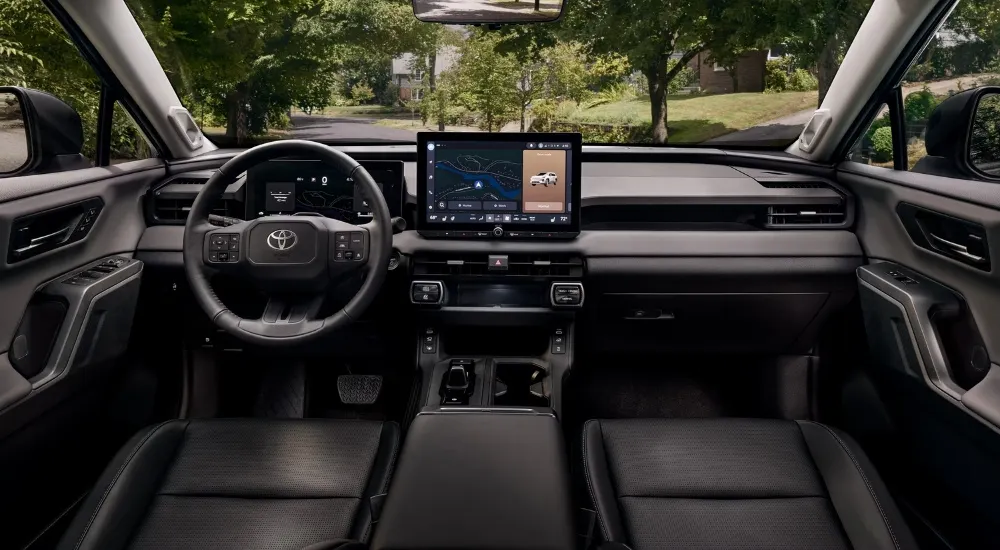
The comparison between the 2026 Toyota RAV4 and the 2026 Hyundai Tucson is not a matter of splitting hairs. The 2026 RAV4’s shift to a standard hybrid lineup has created a class of one. It offers significantly more power, vastly superior fuel economy, and better driving dynamics, all while retaining the practicality and reliability Toyota is famous for.
The Tucson’s base gas engine feels like a way to keep the sticker price low at the expense of the ownership experience. It asks you to accept less power and lower efficiency every single day you drive it. The RAV4 gives you the power you want and the efficiency you need in a single, cohesive package.
For drivers in Smyrna and beyond, the choice is clear. You can stick with the old way of doing things, or you can embrace the new standard. Visit us today to experience the instant torque and incredible efficiency of the 2026 RAV4 for yourself. The future of driving is here, and it’s waiting for you to take the wheel.